Radiation Beam Alignment Verification and Correction
Measure. Correct. Verify.
ATOM SPEC provides radiation beam alignment and verification services for irradiators, X-ray systems, and radiation-producing equipment used in research, medical, industrial, and government facilities. Our services support beam positioning, field uniformity evaluation, dose distribution verification, and overall system performance.
Accurate calibration depends on more than source strength and detector response. The radiation field must remain properly aligned with the mechanical positioning system used to locate instruments, samples, or devices during exposure. Even small alignment deviations can introduce measurement uncertainty, affect reproducibility, and reduce confidence in calibration results.
ATOM SPEC’s Radiation Beam Alignment Verification and Correction Service provides quantitative measurement, analysis, corrective adjustment support, and final verification throughout the operational range of calibration irradiators and reference radiation facilities.
When alignment issues are identified, ATOM SPEC supports adjustment of the irradiator and positioning system to restore proper beam geometry. Following corrective actions, our team performs verification measurements and provides documentation demonstrating system performance and alignment accuracy.
Why Beam Alignment Matters
Calibration systems rely on precise positioning of instruments within a known radiation field. If the beam center deviates from the intended mechanical axis, detectors may not be irradiated at the location assumed by the operator.
Potential consequences include:
Increased calibration uncertainty
Reduced measurement repeatability
Mischaracterized radiation fields
Positioning errors at extended distances
Undetected mechanical or source alignment issues
Reduced confidence in calibration results
ATOM SPEC's Beam Alignment Verification and Correction Service identifies these issues and provides a path to correction.
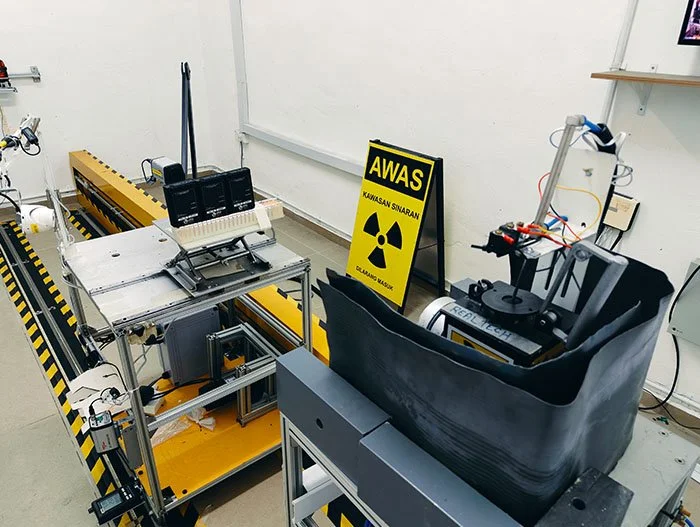
Image courtesy of GEX Corporation
Beam Alignment Verification and Correction
ATOM SPEC evaluates beam position throughout the operational range of the irradiator to determine whether the radiation beam remains coincident with the mechanical positioning system axis.
When misalignment is identified, measured beam trajectory data is used to determine the direction and magnitude of correction required. Adjustments may include repositioning of the irradiator, source assembly, collimation components, positioning system, or a combination thereof depending on system design.
Following adjustment, the beam alignment measurements are repeated to verify performance and document the final alignment condition.
The result is a complete before-and-after assessment demonstrating that the radiation beam follows the intended positioning axis throughout the operational range of the system.
Corrective Alignment Services
Unlike traditional beam characterization services that only identify alignment issues, ATOM SPEC provides a complete alignment solution.
Using measured beam trajectory data, our specialists determine the direction and magnitude of correction required to bring the radiation beam into alignment with the positioning system axis. The irradiator and positioning system are then adjusted as necessary to achieve optimal alignment.
Following adjustment, a complete verification is performed to confirm performance and document the final alignment condition.
This approach provides customers with a complete solution that identifies alignment issues, implements corrections, and documents the final performance of the system.
Comprehensive Beam Trajectory Analysis
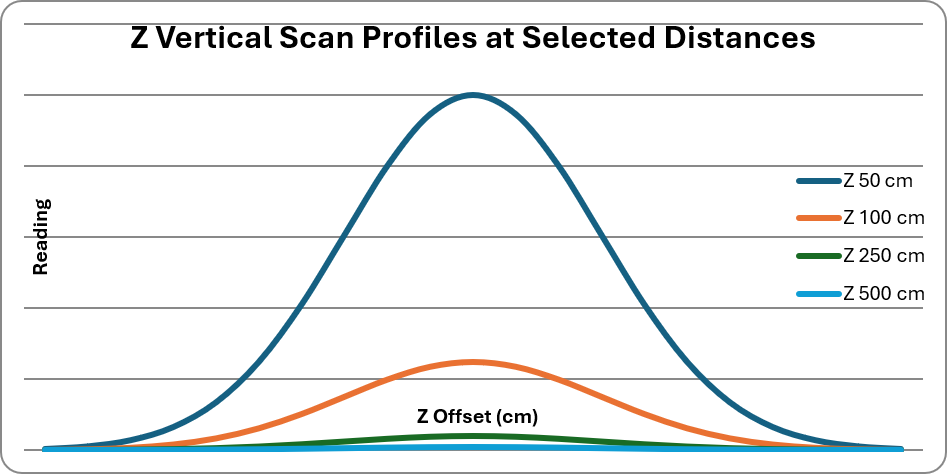
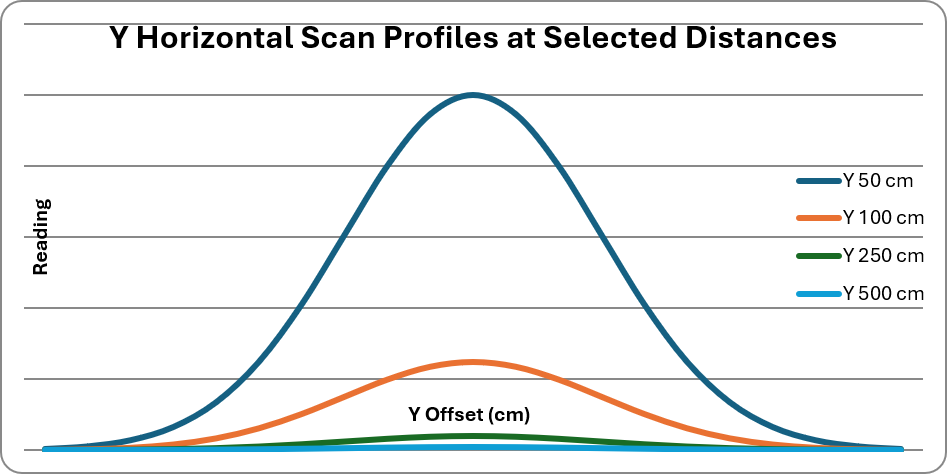
Unlike a single-point beam check, ATOM SPEC evaluates beam position throughout the operational range of the irradiator. This process creates a three-dimensional beam trajectory profile that shows whether the beam remains centered, trends high or low, or drifts left or right as distance increases. The analysis provides a clear understanding of how the radiation field behaves under actual calibration conditions and helps identify mechanical or radiological alignment issues that may affect measurement quality.
Typical outputs include:
Horizontal beam center trend plots
Vertical beam center trend plots
Beam trajectory analysis
Radial offset calculations
Angular deviation calculations
Alignment tolerance assessments
Alignment correction recommendations
Before-and-after comparison plots
Deliverables
Each Beam Alignment Verification and Correction project includes a detailed technical report containing:
Measurement methodology
Instrumentation and traceability information
Measurement geometry documentation
Beam center determination data
Horizontal and vertical offset analysis
Beam trajectory plots
Alignment assessment
Alignment correction recommendations
Alignment correction verification
Before-and-after beam trajectory comparison
Final alignment acceptance assessment
Reports are suitable for quality records, calibration program documentation, accreditation support, and technical audits.
Benefits
Improve Calibration Accuracy
Verify that instruments are positioned within the intended radiation field throughout the operating range of the irradiator.
Reduce Measurement Uncertainty
Identify and correct alignment errors that may contribute to systematic measurement bias.
Detect Problems Early
Identify source, collimator, positioning system, or mechanical alignment issues before they affect calibration performance.
Support Quality Programs
Provide objective documentation supporting ISO/IEC 17025 quality systems, radiation field characterization activities, and internal quality assurance programs.
Improve Confidence in Results
Gain documented evidence that the radiation beam remains aligned with the positioning system used for calibration activities.
This service is applicable to:
Cs-137 calibration irradiators
Co-60 calibration irradiators
X-ray calibration facilities
Reference radiation fields
Dosimetry laboratories
Instrument calibration programs
Radiation protection instrumentation facilities
Custom irradiator installations
Systems Supported
Gamma beam irradiators
X-ray irradiators
Calibration irradiators
Custom radiation systems
Examples:
Any manufacturer of gamma or x-ray beam irradiators
What is radiation beam alignment?
Radiation beam alignment verifies that the radiation field is properly positioned and performing as intended relative to the target area, sample location, or system geometry.
How often should beam alignment be performed?
Beam alignment may be performed after equipment relocation, repair, source replacement, preventive maintenance, or when output inconsistencies are identified.
Does ATOM SPEC provide documentation?
Yes. ATOM SPEC provides alignment results, radiation measurements, corrective actions, and final service documentation.
Confidence in Every Measurement
Accurate calibration begins with a verified radiation field.
ATOM SPEC provides the data, analysis, adjustment, and technical expertise necessary to confirm beam alignment, correct alignment issues, and support reliable, defensible calibration results.
Measure. Correct. Verify.
Contact ATOM SPEC
For questions regarding radiation beam alignment, system performance verification, calibration support, or corrective alignment services, please contact:
Phone: 865-338-0928
Email: info@atomspecs.com
What We Measure
Using precision ion chamber measurements, ATOM SPEC evaluates beam center position in both the horizontal (Y) and vertical (Z) directions at multiple distances from the source.
Measurements are performed throughout the operational range of the irradiator using systematic scan patterns to determine the true beam center at each measurement location.
The resulting data is used to:
Determine the true beam center at each measurement distance
Quantify horizontal and vertical beam displacement
Calculate beam trajectory and angular deviation
Identify trends indicating beam drift or misalignment
Verify coincidence between the radiation beam and positioning system axis
Evaluate alignment performance across the operational range of the irradiator
Determine required alignment corrections
Verify alignment performance following adjustment of the irradiator or positioning system
By measuring beam position at multiple locations, ATOM SPEC develops a comprehensive beam trajectory profile that reveals whether the radiation beam remains centered on the mechanical axis or exhibits measurable drift as distance increases.